Exploring Earth's Deepest Water Worlds
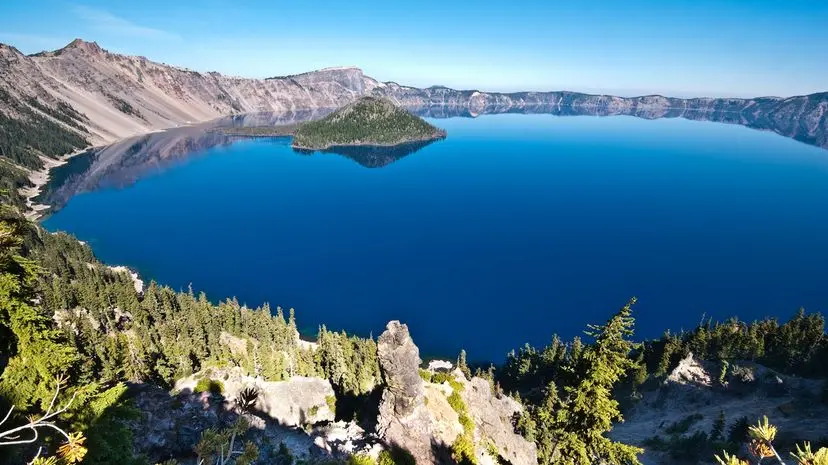
Our planet holds many natural wonders, and among the most amazing are its deep lakes. These huge bodies of water are not just beautiful; they also tell us stories about Earth's past and hide secrets in their cold, dark depths. From lakes formed by giant volcanoes to those hidden under thick ice, their extreme depths create unique environments and offer breathtaking views.
North America's Deepest Treasures
The United States is home to some truly impressive deep lakes. In Oregon, a famous lake holds the record as the deepest in the country. This lake sits inside a huge bowl created by a massive volcano that erupted thousands of years ago. Slowly, over a very long time, rain and melting snow filled this bowl, as no rivers flow into or out of it. This natural wonder is not only deep but also known for its stunning blue water and is considered a special place by local tribes.
But the Oregon lake isn't the only deep one in the U.S. Near the borders of California and Nevada, another very deep lake is known for its clear waters and beautiful mountains around it. It's a popular spot for visitors because it's easier to reach than some other deep lakes.
Further north, in Washington State, there's a lake whose name means "deep water" in an old native language. It's also quite close to towns, offering many fun activities like fishing. Then there's a truly giant lake that touches Michigan, Wisconsin, and Minnesota, and even Canada. This lake is not only very deep but also has a huge surface area, making it the largest freshwater lake on Earth by surface and holding a significant amount of the world's fresh water.
Other deep lakes in the U.S. include one in mountainous Idaho, carved by glaciers from the last ice age, and another in the vast wilderness of Alaska, which is the main feature of its own large national park.
Going Deeper: Lakes Around the World
While the lakes in the U.S. are incredibly deep, the world's deepest lakes take natural depth to another level. These global giants are truly astonishing:
- Deepest of All: In Siberia, Russia, lies the deepest lake in the world. It is incredibly deep, nearly three times deeper than the deepest U.S. lake. This amazing body of water also holds a huge amount of the world's fresh water.
- Hidden Below Ice: Imagine a lake hidden far beneath thousands of feet of ice in Antarctica! This hidden lake is extremely cold and deep, presenting an incredible challenge for scientists to study.
- Border Lakes: On the border between Chile and Argentina in South America, there's a deep lake whose true depth was only recently discovered to be greater than previously thought.
- A Sea or a Lake?: Another huge body of water, often called a sea, is also considered one of the world's deepest lakes. It's so big it's the largest lake on Earth by surface area.
Why Deep Lakes Matter
These deep lakes are much more than just holes filled with water. They are vital ecosystems, home to unique plants and animals that have adapted to their cold, often dark conditions. They are also important for understanding Earth's geology and climate history. For many people, they are sacred places, part of ancient stories, and provide a sense of wonder and peace. Visiting or simply learning about these incredible deep water worlds helps us appreciate the power and beauty of our natural environment.
Useful vocabulary for this level
Here are some useful words related to exploring Earth's deepest water worlds. You can save these words to your personal dictionary to help you learn!
explore, ocean, deep, world, water, pressure, creature, trench, submersible, scientist, research, mystery, bottom, dark, surface, dive, discover, environment, unique, life, extreme, adapt, survive, measure, volume, hadal zoneGrammar patterns found in this adapted reading
In this adapted reading, you can find examples of different grammar patterns.
- Past Simple: "Scientists explored the trench."
- Present Simple: "Water covers most of the Earth."
- Modal Verbs (can): "Life can exist in extreme conditions."
- Present Continuous: "Researchers are studying the creatures."
What new things readers can learn from this adapted text
In this adapted text you can learn new information about the extreme depths of our planet's oceans and the unique life forms that inhabit them. You can discover fascinating facts about the deepest points on Earth and the challenges of exploring these underwater environments. Let's explore some insights:
- The Mariana Trench: Learn about the deepest known point in the ocean, the Mariana Trench, and its extreme conditions. This adapted article for reading explains its location and depth in an easy-to-understand way.
- Hadal Zone: Discover the hadal zone, the deepest oceanic zone, and the specialized creatures that live there. Adapted reading texts often focus on the unique adaptations of these animals.
- Submersibles and Research: Understand the role of submersibles in exploring the deep sea and the types of research conducted in these remote environments. Such reading adapted texts are great for broadening your knowledge.
- Pressure and Adaptation: Learn how extreme pressure affects life in the deep sea and the incredible ways organisms adapt to survive.
- Unique Ecosystems: Discover the unique ecosystems found in the deep sea, including hydrothermal vents and cold seeps. These adapted articles for reading are perfect for beginners.
- Challenges of Exploration: Appreciate the challenges and technological advancements required to explore these extreme environments. Adapted books for reading often highlight such difficulties.
Exploring Earth's Deepest Water Worlds
The Earth is a water world. Oceans cover more than 70% of our planet's surface. But what lies beneath the waves? Our exploration of the ocean depths is just beginning, and some of the most fascinating discoveries are being made in the deepest parts of the sea. This is an adapted reading text perfect for those interested in English reading for beginners and intermediate learners.
The Deepest Place on Earth: The Mariana Trench
The Mariana Trench is the deepest known part of the ocean. It's located in the western Pacific Ocean, near Japan. The deepest point in the trench is called the Challenger Deep. It's so deep that Mount Everest, the tallest mountain on Earth, could fit inside with over a mile to spare! Adapted articles for reading often feature this incredible place.
The pressure at the bottom of the Mariana Trench is immense. It's more than 1,000 times the pressure at sea level. This extreme pressure makes it very difficult for scientists to explore. They need special submersibles – small submarines designed to withstand the crushing pressure.
Life in the Hadal Zone
The deepest part of the ocean, below 6,000 meters (about 20,000 feet), is called the hadal zone. This zone is named after Hades, the Greek god of the underworld. It's a dark, cold, and mysterious place. Despite the extreme conditions, life exists in the hadal zone. These organisms are adapted to survive in the high pressure and lack of sunlight. English reading texts often explore these fascinating adaptations.
Some of the creatures found in the hadal zone include amphipods (small crustaceans), snailfish, and sea cucumbers. These animals have special adaptations that allow them to thrive in this extreme environment. For example, some fish have bones that are flexible, and their bodies contain special chemicals to counteract the immense pressure. You can save these interesting new words to your personal dictionary for easy remembering!
Exploring with Submersibles
Scientists use submersibles to explore the deep sea. These vehicles are equipped with cameras, lights, and robotic arms. They allow researchers to observe and collect samples from the ocean floor. Some submersibles are remotely operated vehicles (ROVs), which are controlled from a ship on the surface. Others are crewed submersibles, which carry scientists inside. Adapted stories for reading sometimes focus on the adventures of these scientists.
One famous submersible is the Alvin. Alvin has been used to explore the Titanic shipwreck and hydrothermal vents – underwater volcanoes that spew hot, mineral-rich water. These vents support unique ecosystems of bacteria and animals that thrive in the absence of sunlight.
Mysteries and Discoveries
Our understanding of the deep sea is constantly evolving. Scientists are still discovering new species and learning about the complex interactions between organisms and their environment. The deep sea is a vast and largely unexplored frontier. There's still much to discover. Consider adapted books for reading to learn more about the ongoing research.
One of the biggest mysteries is how life can survive in such extreme conditions. Researchers are studying the adaptations of deep-sea organisms to understand the limits of life on Earth. This research could also help us understand the potential for life on other planets.
Exploring Earth's deepest water worlds is a challenging but rewarding endeavor. It requires advanced technology and a spirit of adventure. But the discoveries that await us in the deep sea are worth the effort. Adapted reading texts like this one hope to make this exploration accessible to more people. By continuing to explore and study the deep sea, we can learn more about our planet and the amazing diversity of life it supports. This is why having access to good English reading for A1/A2/B1/B2 levels can inspire future researchers.
Remember to save the new words you learned today to your personal dictionary! This will help you improve your English and understand more complex adapted articles for reading in the future.